Author Archive

Stalemate at Turk and Taylor

Posted in Junk 4: Summer 2011, Tom Pitts with tags , , , , , , , , , , , , on July 15, 2011 by Editors

by Tom Pitts

The problem was finding a place to shoot up. I’d tried everything. Public buses, public bathrooms, people’s front stoops, in the parks, in parking lots where needles were hidden safely under the bumper of an immobilized car, it was a constant problem that needed constant solving.

One of the safest, most private places I could think of was the video arcade porno booths. The kind of joint that a guy went into with a roll of quarters in one hand and a hard-on in the other.

I’d done it before. There was a XXX porno shop beside the methadone clinic with the pay by the minute video booths hidden in back. I’d gone in and cooked up, and hit up by the light of thirty-six channels of endless sex.

It was maybe my third visit to the video arcade. I went into the booth, and started to set up shop. This included grabbing some newspaper from my bag and stuffing the glory hole to ensure complete privacy.

This time the paper popped back out. I stuffed it right back in. Again, it popped back out.

“Oh.”

There was someone on the other side pushing it out. I was so focused on finally having solitude that it didn’t even occur tome that that was what the fucking glory hole was there for in the first place. I had a needle in one hand, a spoon in the other. It was worse than being caught masturbating.

“No thanks!”  I said, replacing the paper. Loudly, I thought, but I guess not loudly enough, because the newspaper popped right back out. Goddamn it. I was pissed, I didn’t have all day. They made you buy a minimum three dollars in tokens and each of the tokens lasted only seconds it seemed. I had only so much light to unpack this shit, cook it up, and trickiest of all: find a vein.

At any moment I feared a big hard cock being shoved though the hole. Or a terrified voice shouting, “Hey what are you doing in there? That’s not beating off!”

I leaned over and shouted at the hole.

“Try another fuckin’ booth.” I shoved the paper back at the hole, and added, “Not interested.” An unnecessary appeasement in case I’d hurt the pervert’s feelings. I think he had figured out I’d be doing something other than what he was doing.

I went about my business quick.  My tiny bottle of water, the little rat-shit sized piece of black tar heroin, a shed of filter from my cigarette to draw it up through, and the reason for my urgency, a quarter gram of cocaine, ready to slide in once the junk was heated and dissolved.

I’d pump a few more tokens into the machine and look around for some fucking going on in a white room.  When I thought the light was the best, I’d take the spoon and twist it up into my sleeve, creating a tourniquet, and start poking around till I got something.

Afterward I’d try to stay in there, use up my tokens, check out the movies, but I never could. I’d flip around the channels, rubbing myself a little, but I had no interest, I was already satisfied. Then, the paranoia would set in, and I’d have to move on the next place, the next comfort zone.

*

It took a month or so before I felt like I had to go back to the booths again. It was late, the public pay toilets on Market Street were being serviced and it was too dangerous in the Tenderloin to just plunk down in a doorway and start fixing. The place beside the methadone clinic was too far away. It would only take a few minutes by bus, but that would require waiting for a bus, something I could not bear to do.

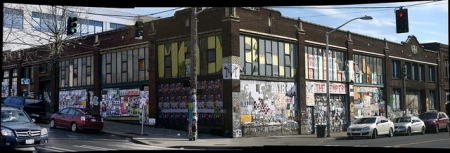
The closest places were the seediest joints in town. Turk and Taylor. The corner was widely known as the place you could buy any drug you could think of. I’d never think of buying there. It was a sure fire burn. It was crack dealers and people selling heavy duty meds. It’s where the homeless went to shop when they needed to self-medicate.

My presence down there was an exercise in self-denial. But I wasn’t gonna linger, I was gonna get this hit and then a bus ride wouldn’t seem so agonizing. After all, I hoped the next bus ride would take all night long.

The shop I picked was at 45 Taylor. It was next door to a halfway house a friend of mine stayed at when he got out of the pen. I walked in and browsed a few moments. It was the same stuff as the other joint. Dildos and DVDs. Same shit, different hole. I walked up to the counter and asked for tokens for the booths in back.

“Minimum three dollars,” said the clerk. Same as the other place. I didn’t say a word; I just forked over the three dollars and made my way toward the back. Once inside, I went through the same ritual as before. Only this time I noticed that the tokens didn’t give me as much time.

I was tearing cellophane with my teeth and drawing up water when I heard a knock. I froze. Fearful like a deer. Who would knock? Is that management? What do they want?  They’d have to assume I was jerking off and want privacy so I decided to ignore them and keep moving.

The red digits on the seconds counter fell as I hurried to assemble the hit. Dope, water, flame, coke, cotton.

Knock, knock, knock.

I had just drawn up the hit, I couldn’t have somebody pounding on the door when I had a needle in my vein, I had to answer.

“Fuckoff.” I called out. No sense in beating around the bush.

The knock came again, a little lighter this time.

“Fuckoff.” I repeated. A little louder this time.

But the knock came back, this time with a voice.

“Open up.” It was tough to make out, but it was a voice.

“Busy.” I answered. I wanted to kick the door open and scream What the fuck!, but I wanted that hit.

“Come on, man. Open up.” The voice was barely above a whisper. I knew it wasn’t management or the cops. It was almost pleading.

What?” I said, as sharply as possible. I still didn’t want to open that door. Then I heard the voice say something I couldn’t make out.  It was a question, I could tell, but who knew what?

The voice repeated the question.

Jesus Christ, I wasn’t gonna get rid of this guy. I didn’t know if he needed a light or if he was hitting me up for change, but I was going to have to open up that door.  I held the needle behind my back and cracked it open just a bit.

There was no one there.

Then, the voice repeated the question. Even with the door cracked, I still couldn’t understand the question. I open the door further to see where the person owning that voice went.

It was then I saw something move in the blackness in front of me.  I looked down and saw two yellowy eyes and a set of grinning teeth looking up. I recognized him immediately; it was as though I’d already seen him in my nightmares. He was a tiny black man,only about 4 and a half feet tall.  I’d seen him many times on Market Street handing out photocopied poetry to uninterested commuters. He was dreadlocked and dirty. His head was too big for his body and his yellow glassy eyes bulged out of that enormous head.

“What?” I repeated, in shock from seeing him there in the first place.  He asked the question again. “Can you what?” It still made no sense to me.

He slowed down.

“When you are done . . . can I eat your wad?”

I blinked, astonished. This is what he wanted? This stranger? Is this what this guy did all night? I was nauseated, disgusted, but most of all pissed off that he interrupted me for . . . this.

I held up the needle in front of his face.

“I’m trying to fix. Fuck off.”

But he just stood there expecting me to change my mind. Grinning, waiting.

After a pause he said, “I mean, after.”

“I’m fixing, I don’t have any . . . wads,” I said and slammed the door.

I went back to work. Wham. Slam. Pack up and get out. I was trying not to think about that little troll at the door, about what kind of death wish one must have to go and beg to gulp a stranger’s semen in a porno booth in the Tenderloin.

As soon as I opened the door, there he was. Still hoping I was going to change my mind, or maybe waiting for the next guy.

I thought to bitch to the clerk, but decided against it. Better to keep moving. Next time, I’d take the excruciating bus ride down to the train station and take my chances with the hobos in the public restrooms; anything to avoid suicidal deviants.
Continue reading

Barfly On The Wall

Posted in Joe Bonomo, Junk 4: Summer 2011 with tags , , , , , , on June 15, 2011 by Editors

by Joe Bonomo

doppelgänger

Crossing First Avenue in lower Manhattan I hear over my shoulder a wheezy voice long associated with the Bowery. “Hey you. Ya ever been married? You?”

I turned. “Oh. Yeah. I am. Happily.”

“Nah. Not me. Never. You’ll never see me tied down!”

With that he eased himself across Fifth Street with a gait resembling a careful child on his first bicycle. Tempered, quasi-confident, scared to death. In the few moments I saw his face, all that registered were the clichés of a drunk: the bulbous, mottled red nose; craggy, deep-set lines; watery, vacant eyes.

Like many of us, I’m rarely as pleased as when a second drink has been placed before me.

Here’s a dream: I wake up bathed in vulgar red light, stretched out on a narrow bench in the back room of The Union, my favorite bar in Athens, Ohio. Rather than feel dissolute, or depraved, or hungover, I’m warmed and cocooned, content. There is no back room with a bench in this bar, at least that I’ve seen. In the dream I awake blessed in the clearly identifiable mood of being placed, rooted, surrounded in the air by comfort and safety. I’m in a bar in a dream and I’m home.

*

I stand across the street and watch as Kevin skulks down Union Street, ducks into the smokes shop to grab a newspaper, and disappears into the Union. It’s noon, or earlier, maybe it’s eleven. He is walking, then he vanishes into the lunch gloom of the bar. I want to follow him in, to begin the slow, glad dissolve of an afternoon, to welcome the warm, gold mirage, but I have somewhere more important to go. I stand on the street for a minute, feeling vaguely dumb, watching the door. In retrospect, I was a cousin to Paul in Willa Cather’s “Paul’s Case,” who wanted to be involved in the theatre in some urgent but undefined way and after a performance followed the singer to her hotel where he simply stood, across the street, and watched her go in and then imagined what her room was like, how it was appointed, the splendors behind closed doors, the riches bestowed upon a star. I’m standing and watching, too, as a local drunk-star walks his beat.

And I’m wondering, poised between theory and practice. It’s a useless place, in many ways. I tend to romanticize from theoretical positions, a dangerous and solipsistic behavior. In the Old French, romanz meant a verse narrative, a story told of love affairs. By the mid-seventeenth century, the word romance came to mean, in literary terms, “characteristic of an ideal love affair.” My love affair with drinking was consummated mutely, without the passion and totality that I craved. Most people regret having not attempted something grand—do I regret not being a barfly? The question feels silly as I write it, and yet the question lingers. Had I a doppelganger on friendly terms, I might have struck a bargain: you go into that bar and drink yourself into oblivion; I’ll go the other way; we’ll meet up. One night—we’d been drinking—Amy and I talked about trying a kind of liquored-up immersion journalism, dropping out of the academic life, hitting the road, finding a comfortable saloon, and becoming committed, open-to-last-call barflies for a year or so; our angle was to write about the experience, burdened as we were with the pressure (and the desire) to find a marketable book idea. Soon enough Amy demurred out of fear that a year of hard drinking might re-wire her body toward full-on alcoholism. Fair enough. I didn’t give in so easily.

*

Romance, early beers, early clichés. Cheap Red White And Blue beers in rural Maryland, on the Eastern Shore. My friend Marty’s uncle’s family owned Genesar, a small brick home built in the eighteenth century, and acres of surrounding farmland buttressing the bay. The house had been added to the National Register of Historic Places fifteen years before Marty and I arrived in a beat-up/patched-together ’66 Travelall, giggling on our way to spending a week on the beach at Assateague State Park, near Ocean City. We camped for the night and plugged in to the ageless and heady vibe of the land. Early beers: the horizon lengthening, softening toward dark sweetness; the buzz of cicadas tuned to a new key singing songs of dusk landscapes that I knew the words to; strangers-now-friends leaping from corners, or materializing next to you, magically; tunes from the boom box duetting with breezes over corn and bean fields, the far-near Atlantic Ocean. I was 17 or 18. I remember this night as an especially wonderful night of drinking . . . what followed were years of ebb and flow between reason and excess, between logically counting the plastic cups in my hand at the bar and waking up afraid to look in my wallet, between not tonight and not enough, between chasing beers with water like clockwork and tumbling down the stairs.

When I was twenty-two I was arrested for drunk driving in Washington D.C. Marty and I’d pulled out of a pizza place in Adams Morgan and I’d neglected to turn on the headlights; a few minutes later the Park Police pulled me over. Is this luck, I asked myself when the first breathalyzer didn’t operate properly and I was driven to a park sub-station across the Anacostia River to try and blow again. By this time my blood-alcohol levels were lower, and I was arraigned on a lesser DUI. My car sat forlorn in the park overnight, a red ribbon of ignominy hanging from the front door. After a visit to the D.C. courts I opted to enter a diversion program that would expunge my record. I was deeply embarrassed, and wanted a kind of civic cloth to wipe it all away. I’d been arrested in December; in January I was back at graduate school at Ohio University in Athens, where I’d been living at the Union Bar from Thursday to Sunday. I was required to make weekly visits for one month with a university-appointed drug and alcohol counselor, a large man with an open, pleasant face who seemed to regard me, professionally and politely, as the obligation I was. He swiftly administered an alcoholic diagnostic test (I passed) and suggested that for the duration of our sessions I cease drinking. I of course agreed, though I found the prospect galling: I was in grad school with a growing troop of drinking buddies, living in a small town with an absurdly high bar-per-capita ratio. For a month I drank ice water standing next to juke boxes, pool tables, and pinball machines, and drank tea and Coke at home, and awoke clear-headed.

The sessions with my counselor continued unremarkably. Within a few sessions he’d decided that I wasn’t a problem drinker, that I’d been reckless and stupid; I’d fucked up and was now paying for it. We discussed addictions, social drinking, pressures of all sorts. Eventually he had his feet up on the desk and we were laughing about other things, sports, living in Appalachia. He is an alcoholic, and like many who’ve quit drinking has applied his new-found energies not only to staying sober but to help others stay sober, and what stuck with me was a story he told me early in our sessions. His low-point as an addict—which he related to me with an effective blend of fire-and-brimstone and contrition—came on a blizzardy night. He found himself desperate and out of his mind in a strange town, running without shoes for miles to the nearest liquor store, bounding through snow drifts risking frostbite and worse to get to a bottle. His long climb out of this hole, he told me, had been arduous and painful, the place where he now stood sorely welcome.

Though the image of my counselor in the snow, lunging against health and reason, was vivid, I resumed social drinking as soon as I could, balancing his addiction woes against my internal rudder. Parties, bars, home, years. My worst hangover came nearly a decade ago in Manhattan; I was drinking at the International on First Avenue with Bill Millhizer of the Fleshtones, and the bartender was pouring four-fingers of Wild Turkey, on the house; hours later Bill and I ended up around the corner at the Grassroots Tavern on St. Mark’s Place. I remember that we couldn’t bring ourselves to finish the last pitcher of beer, I remember weaving as I stood outside on the street—I don’t remember making it from the East Village to the subway at 14th Street to Brooklyn, where I was staying at the YMCA in Greenpoint. I was sick in my room, and woke up the next morning in misery, an axe in my head, feeling dissolute, steeped in remorse, gagging toward a day and night of holding down little more than water and toast. I was in my mid-thirties, and I resolved never to drink to such excess again.

*

I’m curious and a little embarrassed by way the hardcore miseries of my experience are deflected away by the tendency to romanticize bars and heavy drinking. Note my passive voice. I’m doing the sentimentalizing here. My counselor’s tale of desperate addiction is only one of many, and I’ve seen enough depravity and self-indulgence, misery and self-deception in my decades in the bars, and among some of my unfortunate friends and acquaintances, to recognize that a barfly’s life is vexed, unhappy, and sad, nothing to preciously elevate. There’s a nice-looking dive bar near the intersection of Belmont and Clark, in Chicago. Every time Amy and I drive by I say, I’d like to go in there. I haven’t yet. I think I’d rather be on the outside looking in, setting the scene, emotionally sloppy on my own movie set, buffing my slumming credentials. Perhaps I have to accept an aspect of myself that is childish. I should just name it: my name is Joe, I’m an addict, and I’m addicted to romancing debauchery.

I’d like to think that I’m in recovery, but I’m not so sure. Addiction to romanticizing, addiction to sentimentalizing, can be dangerous lifetime habits. As an addict is wary of his next sip, her next pain pill, so am I wary of the next indulgent slip into idealizing, because it could be fatal to what I might call the Mature Life. While an addiction to romancing debauchery is certainly better for my physical and mental health than actual debauchery, it poisons in a different way: I can place a dive bar on a pedestal high enough that all I really see is its appealing shape, its blurring borders in Ideal Land, the pretty wink of neon signs. Romanticizing a bar is like falling for the Platonic promise of model homes at new housing developments, or the house façades on a movie set. The crisp front walk and neat green hedges, the clean white paint and trim, the shimmering bay windows present the family within as cast by Woods-Were-Once-Here Corporation. When we walk into a stranger’s home we know the odd smells and psychological histories, the muttering corners and emotionally weighted heirlooms, actual realities, the flawed families inside not reading from scripts, but improvising daily.

*

In Manhattan over several summers I’d embark on dive bar crawls, hitting Rudy’s, Siberia, and Bellevue near Port Authority and fading Times Square, and Mars Bar, Mona’s, and Sophie’s, among many others, in the East Village. Only Mona’s took; I still drop in to this dark, comfortable hole when I’m in the city. Some of the other bars felt to me like anthropological sites, environments where I could enjoy myself, certainly, but where I didn’t really belong, not because I didn’t live in the city, or because the prospect of an afternoon bender isn’t appealing to me, or because I’m frightened of the unhappiness that drifts over me at certain joints after a couple hours, or because I can’t humanely imagine the desire to drink oneself into oblivion and erase what needs erasing. In the imagination it’s easier to mitigate the addictions of men and women who don’t have the luxury of pretending that to dissolve, to vanish, to crumble is romantic. Living too long in the imagination is tempting, and dangerous—I remove myself from tangible reality and create a false comfort. My drift toward romance and sentimentality is analogous to addiction as it divorces me from the world, creates a reality in the mind that’s always hospitable, always heartening, never too dark to acknowledge, where the story ends before the sad denouement. Perhaps writing “sad denouement” is too tender a way to describe the brutal reality of some addicts. This is part of my problem. Like all addictions, mine tells lies.

Continue reading

Yaaaay, Bite Your Nails!

Posted in Jeffrey Brown, Junk 3: Spring 2011 with tags , , , , , , , , , , on May 30, 2011 by Editors

by Jeffrey Brown

(Click image for full size)

Continue reading

Grace

Posted in Junk 3: Spring 2011, Laurie Woodum with tags , , , , , , , , on May 14, 2011 by Editors

by Laurie Woodum

I didn’t expect a crowd at my brother’s memorial service. His drug and alcohol addictions had mowed a wide swath through family and friends in the course of his 52 years, leaving casualties and severed connections strewn behind him. I thought that it would mostly be family attending. What I witnessed instead, was a packed house.

Part of the service was reserved for people to speak about Alan if they wanted to. Person after person stood up to tell how he helped them: plumbing and car repairs, rides to work, and listening with love—sometimes tough love. Several people mentioned that they thought he was goofy at first (the word came up many times) but grew to love his playfulness.

One pastor said Alan was a mystery to her. She didn’t know him and yet every Sunday he helped one of the church attendees set up for services and then he would leave. She asked him if he was going to attend and he’d say yes and then not show. One day she asked and he said “I’m going to be straight with you. I won’t be coming to services. You can quit asking.” Still he came Sunday after Sunday to help. She said when she looked at his face, she saw a very sad man. I could see it in every photo of him in his later years.

The real miracle, the gift of grace, was the children who spoke. From two of his grandchildren (five years old) to the young adults who grew up in his neighborhood, they came to the podium one at a time or in small groups. A cluster of four girls, around 11 or 12, passed the microphone among themselves reciting the times when he sprayed them with a hose on hot days, gave them popsicles, listened to their young woes, and sang the “Ice Cream and Cake” song. A 10-year-old boy came up with his mom because he wanted to speak but was crying too hard to say much more than, “I loved him.” His mother expressed the common litany of that day: the helping hand, the goofy cheerfulness, the sympathetic ear. A young man, who was stabbed when he was eleven, spoke of Alan’s anger and support around this trauma and Alan’s kindnesses as he was growing up. Child after tearful child spoke of their love for him.

For the three of us sisters and our families, this was a revelation. I’d seen Alan caring tenderly for my mother during her hospital stays and during my father’s final days. I knew his potential. But for most of our family history, we experienced another side. I think the difference was that, although we loved him, we didn’t need him. These people–his neighbors, his wife’s church community–needed him and it brought out the best he could be. He was offering service. It turns out he was the man I always hoped he would become. I just didn’t know it.

Continue reading

Quiescence

Posted in Junk 3: Spring 2011, Leslie F. Miller with tags , , , , , , , on April 17, 2011 by Editors

by Leslie F. Miller

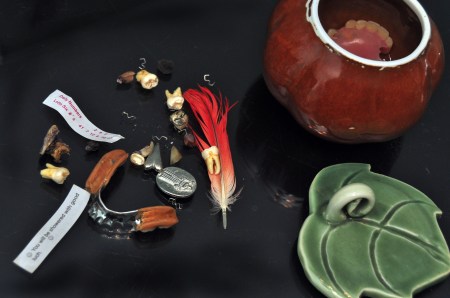
she and I will pour with nonchalance the contents of this marble box: three dog whiskers, the fang of a tarantula, her dried umbilical cord, pinched and blue like a stone, the orange feather of a friend’s fancy bird, grammy’s shimmering silver bridge, my own four wisdom teeth, and a few good misspelled fortunes, delighting in your awkward squirm as something animal rolls across the ripples in the couch and touches your naked thigh.

she saved the cord! you’ll say to them later, as if we are somehow broken, this well-practiced list your new soliloquy against a mother and her girl, but we are all tethered to our treasures, and who’s to judge the things we save: the care with which you dig the dahlia corms and tuck them in a burlap sack, the flowers that you paralyze in books, the seeds you squeeze in envelopes. who’s to judge a box of lonely things we couldn’t bring ourselves to lose?

Continue reading

Cracked

Posted in Junk 3: Spring 2011, Shannon Barber with tags , , , , , , , , , on March 12, 2011 by Editors

by Shannon Barber

The nurse kept asking if I smoked crack. My intake at the clinic seemed to focus around my supposed children, my supposed acts of wanton prostitution and my supposed crack habit.

“When was the last time you did any drugs?”

The nurse never looked me in the eye; she spoke my name in a weird buzz heavy voice, Mizz Barr-Berrr. She made my name sound like an accusation, of what I didn’t know but I was guilty of course.

I had to keep my composure, I called her ma’am, I filled out my paperwork in my neatest hand and I honestly listed my ailments. Then there was the crack and children questions, I stopped counting at six times because I was so angry I couldn’t keep it up, I remember clenching my toes inside my boots so I wouldn’t clench my fists and appear like the angry Black woman I was.

“Mizz Barr-Berrr, when was the last time you did any narcotics?”

“Two weeks ago I tried marijuana.”

“I see. How many times a day do you use it?”

“None, I don’t like it.”

She pursed her lips and scribbled something hard on the clipboard, she exuded disapproval and left.

I sat in a cold exam room in my paper gown with my boots still on. I felt gross; I wasn’t sleeping, had no insurance and needed a pap smear. I couldn’t concentrate enough to keep the repeated questions about the crack use I’d never experienced from playing in my head.

By that time I had pretty well established what drugs I could and couldn’t do. I loved hallucinogens, E, prescription speed all were trusted old friends. I didn’t sleep much anyway and anything speedy kept the sleep deprivation symptoms at bay. Anything that made me dance or fuck all night was fine by me. Crack was not on the list.

I sat on that cold paper covered exam table, contemplating crack. I hadn’t ever tried it despite having had plenty of opportunities. I hated the way it smelled, I hated the idea of burning my lips and fingers on a pipe and yet I still wondered if I could forgive all that for the high? Was it important to my experience that I try it at least once so I could answer that question in a more satisfactory way?

My exhausted brain fixated on the idea and I forgot why I had gone to the clinic in the first place. When I arrived, I had my purpose in an iron grip. Pap smear, help for my insomnia and perhaps some advice about how to get mental health help because I was fairly certain I was going insane. I had to try and concentrate so I could talk to the doctor like a grown up lady. When the doctor walked in and began to ask me the same questions about my supposed crack use and possible history of abortions. It was too much.

The weight of the doctor’s disapproval regarding my apparent lies about my drug use and number of children or abortions I’d had, broke the thin veneer of self-control I was clinging to. I wept like an over tired toddler who can’t even throw a proper fit. I confessed to everything.

I tried smoking weed, I got drunk, I got really drunk, I liked speedy drugs, I ate shrooms when I could get them, I wasn’t sleeping so I was masturbating so much my labia felt swollen and irritated, I thought I was going crazy and I had a weird rash near the crack of my ass. I couldn’t seem to eat anything but crackers with everything on them and my face kept twitching.

The doctor was unimpressed by my outpouring and closed the file folder with a snap.

“We do not tolerate drug seeking at this clinic.”

She walked out and I sat there weepy and bewildered, I put my clothes on without having a stranger look at my cervix or squeeze my breasts. I wandered out and back into the lobby where the nurse was waiting for me.

“Mizz Barr-Berr, take these and come back when you are ready.”

I was ready, I was twenty-one goddamn years old, people had been looking at my cervix since I was thirteen, and I had mammograms before. I had gone all alone to get HIV tests and full STD panels. I was so ready to-

Then I realized that supposedly I was a crack addict, prostitute and deadbeat Mom who had aborted countless hordes of fetuses. The pamphlets were for Narcotics Anonymous and there was one on sterilization. I left and sat at a bus stop trying to process what had just gone on.

My mood swung from feeling guilty of everything to the familiar and comforting gut churning rage I like to call my friend. I got myself back together and went home. After masturbating again and failing to go to sleep I laid on the floor staring at my ceiling and pondering the merits of getting on the glass dick.

I reasoned that no one expects a crack addict to be sane so I could stop pretending. I already did not sleep so the hours of mania would be no problem. I could probably suck dick for cash, I sucked cock for free so why not for profit? Would I like more than I liked any other drugs?

I dug deep into my drug knowledge and impressions of the crack addicts I knew, my brain spun and then I slept. The sleep was the kind of restorative thing that put all my civilized human things back into place, except that I still had a smoldering urge to try smoking crack.

For months after that, my method of counting sheep without counting sheep was debating with myself in my head about whether or not to smoke crack. I never did try smoking crack. Not because I talked myself out of it but because of the voice of that nurse I knew that the second I hit a crack pipe, the only thing I would hear in my head would be her voice, forever ruining my high.

“Mizz Barr-Berr…”

Continue reading

Slow Burn

Posted in Erin Murphy, Junk 2: Winter 2011 with tags , , , , , , , on February 14, 2011 by Editors

by Erin Murphy

glassworks

The day my brother nearly burns down the house, I am sitting on the living room floor.

Correction: it’s not a house but an apartment, my father’s first since the divorce.

I am playing with Lincoln Logs on the burnt-orange shag carpet, building and rebuilding a perfect house with a green roof.

Correction: I’m not playing; I’m killing time until we’re returned to our real home with our real toys and our real parent.

My father is taking a nap in the apartment’s only bedroom.

Correction: It’s not a nap but his usual stupor, a label for which we won’t have for years.

I see the fire out of the corner of my eye.

Correction: What I see first is the shadow puppet of a fire performing on the kitchen wall; mesmerized, I watch for the better part of a minute before investigating its cause.

When I crane my neck around the corner, I see my two-year-old brother waving a brown paper bag that he has dipped in the lit burner of the gas stove. Pretty, he exclaims. Pretty! Pretty!

Correction: He can’t pronounce pretty. He says pity.

I knock the burning bag from my brother’s hand and scream for our father, who bolts from the bedroom and douses the flames.

Correction: Our father doesn’t respond until I shake him awake; he extinguishes the fire with a pot of cold, two-day-old coffee.

My brother’s exclamations soften to a whisper: Pity. Pity. Pity.

No correction necessary.

Continue reading

Detox

Posted in Barry Grass, Junk 2: Winter 2011 with tags , , , , , , , on January 13, 2011 by Editors

by Barry Grass 

Patches of skin walk in sagged and browned. Patches of skin like ruins of skin on skin. Some skin showing where hair once was. Mostly ruined skin showing where a person once was. No. Always a person. Never forget their humanity. Never call them desperate. Always notice their desperation. There are the tests, always, the tubes & diastolic numbers & cuffs & pumps. There is the paperwork, always, the photocopies & emergency contacts & “how long?”s & “where at?”s. There is the hatred, never, but down there somewhere, near memories of fathers, near feelings of abandonment. There is the conflict.

Always. Cover the skin. Throw sheets on the ruins and flush out the grime. Fight the protests. Check the purse, the pant leg. Take the knife, the rock. Wear gloves, always, but never do; gloves create distance. Desire distance, always. Get close in spite of desire, always. Take blood pressures. Talk to them until sleeping. Look at that skin. 

Continue reading

Need

Posted in Dinty W. Moore, Junk 2: Winter 2011 with tags , , , , , on December 14, 2010 by Editors

by Dinty W. Moore

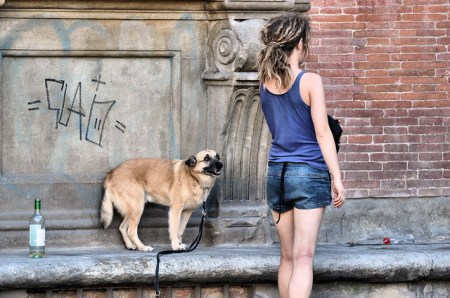
Florence, Italy, August 2010

Continue reading

Detritus

Posted in Elizabeth Westmark, Junk 1: Fall 2010 with tags , , , , , , , on November 14, 2010 by Editors

by Elizabeth Westmark 


Dear Max,

I’ve reached that stage of life where my sins of omission far outweigh my sins of commission.

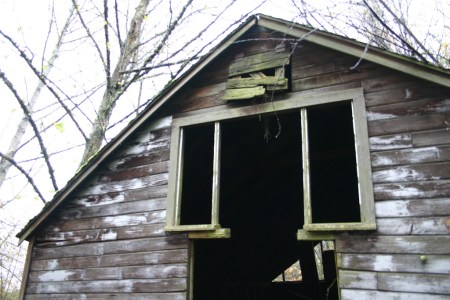
The old preacher who befriended you in that tiny town where you were living led us to the small frame house by the railroad tracks.

The dilapidated wooden swing on the porch whispered of better times. We slowly followed the reverend to the front door. He jiggled the key and twisted the loose knob, pushing on the humidity-swollen door until it opened.

Collectively taking a deep breath, we stepped over the threshold.

Oh, dear God, so this is how you were living.

Continue reading